Increasing climate change and human-induced pressures continue to threaten marine ecosystems. Thus, understanding what happens beneath the ocean’s surface has become increasingly important. Coral reefs, which support marine biodiversity, coastal livelihoods, and food security, are particularly vulnerable to rising ocean temperatures, unsustainable fishing practices, marine pollution, and other environmental pressures. Regular monitoring is a way to understand the condition of the coral reef ecosystem. However, conventional underwater surveys often face limitations, including unpredictable weather, restricted diving time, and the need for specialised expertise.
Can technologies help overcome challenges in marine ecosystems?
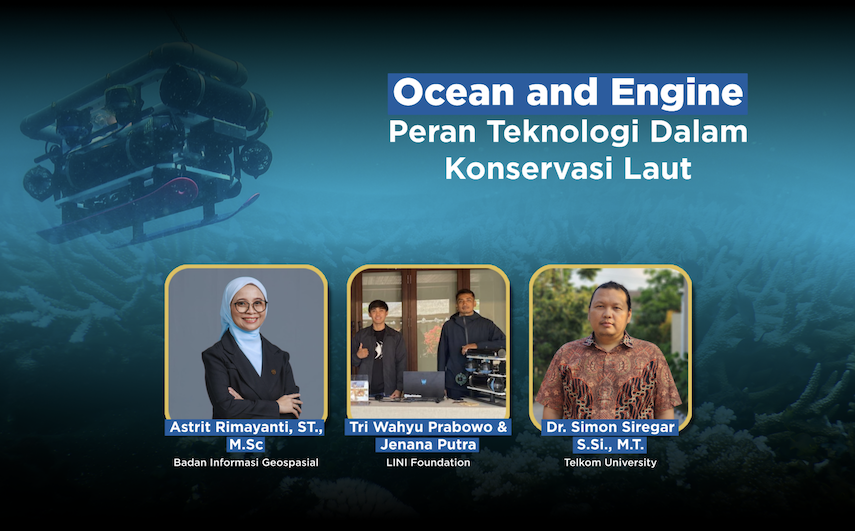
To explore this question, LINI hosted “Ocean and Engine: Exploring the Role of Robotics and AI in Marine Conservation” on Saturday, 24 October 2026. As part of LINI’s webinar series, the event brought together conservation practitioners, academic researchers, and government representatives to explore how underwater robotics, artificial intelligence (AI), and geospatial technologies can contribute to marine ecosystem monitoring and conservation. The webinar attracted 149 registrations, with 80 participants joining via Zoom and 68 submitting attendance forms.
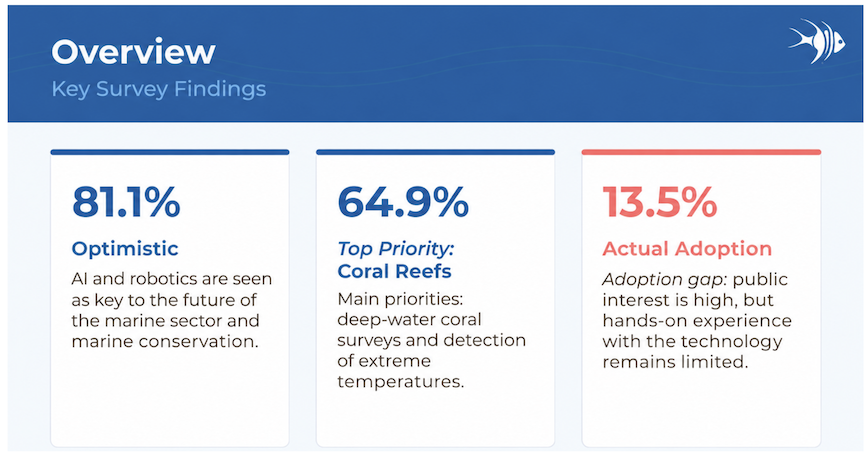
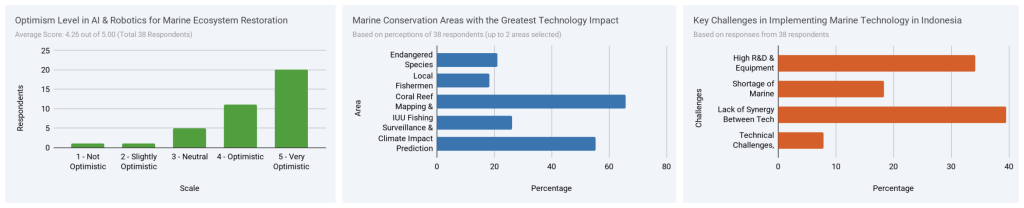
Prior to the webinar, a preliminary survey was conducted by LINI to explore public perceptions of technology in marine conservation. Optimism toward emerging technologies was reflected in the findings, with 81% of respondents expressing confidence in the potential of AI and robotics to play a key role in the future of marine conservation, while coral reefs were identified as a conservation priority by 64.9% of respondents.
Despite this positive outlook, a gap between public interest and direct experience with these technologies was also identified. These findings were presented at the beginning of the webinar to provide an overview of public perceptions and highlight the importance of making technological innovations more accessible, practical, and applicable to marine conservation efforts.
Exploring Underwater Robotics: Innovation from LINI
Monitoring coral reef ecosystems is essential for understanding their condition and identifying changes over time. While conventional surveys conducted by trained divers remain valuable, they often face challenges such as unpredictable weather, limited diving time, and the need for specialised expertise. These limitations have encouraged the exploration of technologies that can complement existing monitoring approaches.
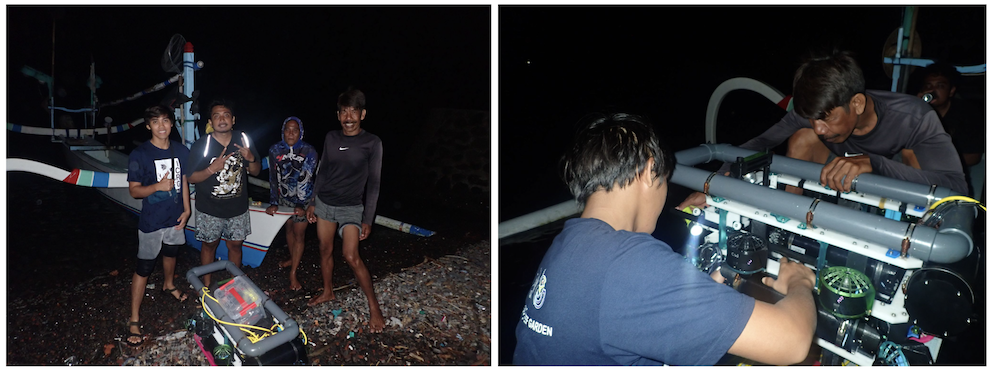
During the webinar, Tri Wahyu Prabowo and A.A. Gde Jenana Putra, robotics developers at LINI, shared LINI’s ongoing efforts to develop underwater robotic technology for marine ecosystem monitoring. Supported by Schmidt Marine Technology Partners and Reefgen by Good Machine, the project focuses on developing a Remotely Operated Vehicle (ROV) and exploring the integration of artificial intelligence (AI) to support coral reef monitoring and ecological data collection.
Through underwater imagery collected by the ROV, AI-based tools are being developed to recognize coral life forms and identify selected reef fish species. The project also explores the reconstruction of three-dimensional (3D) reef models, offering opportunities to better visualise underwater environments and support future ecological assessments.
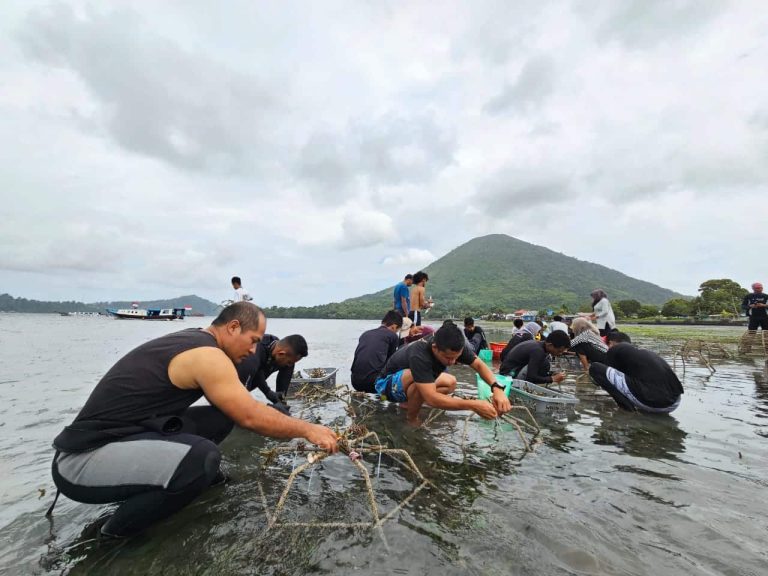
Beyond the technical aspects, community involvement remains an important part of LINI’s approach. Local fishers are engaged in field activities, including through the use of community-owned boats during monitoring operations. This reflects LINI’s belief that technological innovation should not replace human involvement, but rather strengthen conservation efforts while creating opportunities for local participation.
Advancing Underwater Robotics for Better Ocean Understanding
While underwater robotics offers promising opportunities for marine conservation, developing reliable systems for complex ocean environments presents its own challenges.
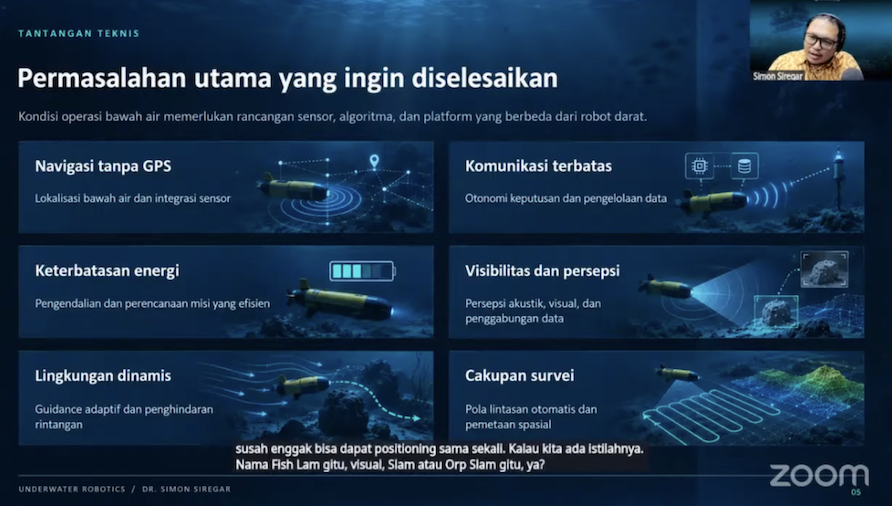
These challenges were explored further by Dr. Simon Siregar, S.Si., M.T., Assistant Professor at Telkom University, who shared insights from various underwater robotics projects focused on marine observation, mapping, and environmental data collection. His presentation also highlighted how robotics research and competitions contribute to the development and testing of underwater technologies.
Unlike land-based systems, underwater robots cannot rely on conventional GPS signals for navigation. Their operation requires solutions for underwater positioning, energy efficiency, sensor integration, limited visibility, and constantly changing environmental conditions. Advances in acoustic and visual sensing, adaptive control, and automated survey planning are therefore essential for improving their reliability and performance.
These developments demonstrate how robotics can expand our ability to explore and monitor underwater environments. However, as emphasised by Dr. Simon, robotics alone cannot save the ocean. Its value lies in helping people better understand marine ecosystems and make informed, data-driven conservation decisions.
Mapping the Ocean: Connecting Technology with Geospatial Information
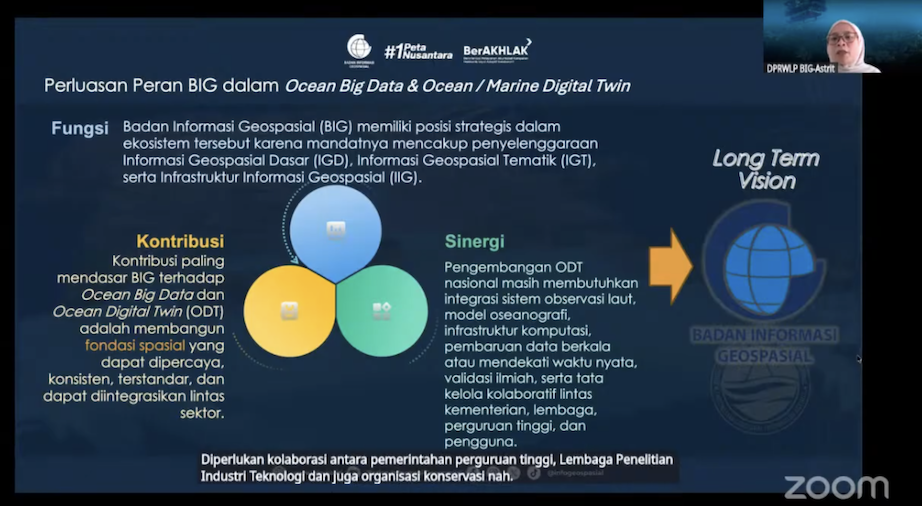
Beyond collecting underwater observations, understanding marine ecosystems also requires reliable spatial information. Geospatial technologies play an important role in translating environmental observations into maps and spatial data that can support marine conservation and management. This broader perspective was presented by Astrit Rimayanti, S.T., M.Sc., Director of Marine and Coastal Topographic Mapping at Indonesia’s Geospatial Information Agency (Badan Informasi Geospasial/BIG).
As the world’s largest archipelagic country, Indonesia faces significant challenges in mapping its extensive marine and coastal territories. Accurate geospatial information is essential for understanding seafloor characteristics, coastal environments, and the spatial conditions needed for effective marine management.
Various technologies are used to support these efforts, including single-beam and multibeam echosounders, airborne LiDAR bathymetry, Structure from Motion (SfM), and satellite-derived bathymetry. Each method offers different capabilities depending on environmental conditions and survey requirements. For instance, optical-based approaches are generally more effective in relatively clear and shallow waters, while acoustic technologies can be applied across a wider range of water-visibility conditions.
Despite these technological advances, large-scale marine mapping in Indonesia remains challenging, particularly due to the extensive areas requiring surveys and limited government funding. These challenges highlight the importance of selecting appropriate technologies and strengthening collaboration to improve the availability and accessibility of marine geospatial information.
Looking Ahead: Advancing LINI’s Underwater Robotics
Building on its ongoing robotics development, we aim to enhance the reliability, accuracy, and adaptability of its underwater ROV to support marine ecosystem monitoring across different field conditions. Future priorities include extending the ROV’s observation range, improving its stability and energy efficiency, and testing additional control capabilities to support more effective underwater operations.
Alongside these improvements, LINI plans to strengthen its AI-based monitoring tools by expanding underwater image datasets collected across different depths, visibility conditions, and marine environments. Further development will focus on improving coral and fish detection, integrating AI-generated observations into reconstructed 3D reef models, and developing reliable methods for estimating coral cover and tracking fish. These capabilities will require continued testing and validation before they can be applied more broadly in ecological assessments.
Recognising the importance of collective efforts, we welcome opportunities to collaborate with research institutions, government agencies, private-sector partners, conservation organisations, and local communities to further develop and test marine technologies, strengthen field-based research, and explore practical solutions for marine ecosystem monitoring. By bringing together diverse expertise and perspectives, we hope to contribute to a future where marine technology becomes more accessible, collaborative, and effective in supporting ocean conservation.
By Retno K. Ningrum, Anandabhuwana, Tri Wahyu Prabowo and A. A. Gde Jenana Putra